ياهلا بوابة السفر والسياحة
A Record-Breaking Moment for Robotics
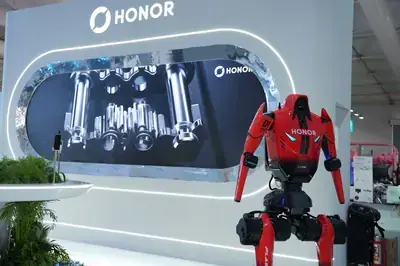
When HONOR’s Lightning humanoid robot captured global attention with a series of record-breaking performances, the headlines understandably focused on speed. HONOR Robotics D1 broke five human world records, completing a half marathon in 50 minutes and 26 seconds, 1,500 meters in 2 minutes and 30 seconds, and 100 meters in just 9.32 seconds, while reaching a peak speed of 14.5 meters per second.
The performances demonstrated a level of athletic capability previously considered out of reach for humanoid machines, sparking widespread discussion about just how quickly robotics technology is advancing.
Yet the real story extends far beyond the stopwatch.
The Rise of Embodied AI
While achievements on the track demonstrate remarkable engineering progress, they also point to a broader shift taking place across the technology industry. Artificial intelligence is no longer confined to analysing information on a screen. It is increasingly being designed to understand, interpret and respond to the physical world around it. From navigating complex environments to making decisions in real time, the next era of AI will be defined not only by what it knows, but by how effectively it can interact with the world.
This evolution is often referred to as embodied AI, where intelligence is paired with movement, perception and action. In a race, a humanoid robot must do far more than run quickly. It must continuously process information from its surroundings, maintain balance, adapt to changing conditions and make split-second adjustments throughout its movement. Such capabilities demonstrate how AI is moving beyond digital commands towards real-world understanding.
Why Robotics Matters Beyond the Race Track
The significance of this trend extends well beyond robotics itself. As AI systems become increasingly capable of understanding context and responding intelligently, the lessons learned from these advancements have the potential to influence a wide range of everyday technologies.
For consumers, this shift is particularly relevant. People increasingly expect their devices to be proactive, intuitive and personalised. Technology is no longer judged solely by processing power or specifications. Instead, users value experiences that feel intelligent, seamless and capable of adapting to their needs.
Achieving this vision requires AI systems that can process information quickly, understand intent and respond meaningfully in real time.
The Future of Intelligent Devices
The same principles driving the next generation of robotics are also shaping the evolution of personal technology. Advances in perception, contextual understanding and intelligent decision-making are helping create devices that feel more aware of both users and their surroundings.
As AI capabilities continue to mature, devices will become increasingly capable of anticipating needs, simplifying tasks and offering more personalised experiences. The result is a more natural relationship between people and technology, where interactions feel less like commands and more like collaboration.
Rather than simply responding to requests, future intelligent devices will be expected to understand context, recognise patterns and support users in increasingly proactive ways.
Where Robotics and Consumer Technology Converge
This is where the convergence of robotics and consumer technology becomes particularly exciting.
For many years, robotics and personal devices have been treated as distinct categories. Today, however, both industries are being shaped by the same fundamental goal: creating technology that can better understand and interact with the world around it.
The pursuit of faster processing, enhanced perception and smarter decision-making continues to drive innovation across the entire AI ecosystem. As advancements in one area accelerate, they often inspire new possibilities in another.
From intelligent assistants and advanced imaging capabilities to increasingly personalised user experiences, the impact of AI innovation is already being felt across everyday technology.
Building an AI-Powered Future
Looking ahead, the future of technology will not be defined by a single breakthrough device. Instead, it will be shaped by connected ecosystems of intelligent technologies working seamlessly together.
As AI becomes more capable, users can expect more natural interactions, greater personalisation and experiences that adapt more effectively to individual needs. The focus will move beyond standalone features towards intelligent ecosystems that support people throughout their daily lives.
The recent achievements in robotics offer a glimpse into that future. While record-breaking performances may capture attention, they also demonstrate the pace at which intelligent systems are evolving and how rapidly the boundaries of what technology can achieve continue to expand.
Beyond the Finish Line
Ultimately, the significance of innovation is not measured solely by how fast a robot can run. It is measured by how those advancements help create smarter, more intuitive experiences that improve the way people interact with technology every day.
As AI continues to evolve, robotics will serve as an important testbed for what comes next. The finish line, it turns out, may be just the beginning.